Tuesday, 29 March 2011

Gone With The Wind

I have not posted for a while – certainly not for the lack of reading novels, but because of the fact every word I‘ve typed over the last few months has been a contribution to my horrendous dissertation. However, it is handed in, it is the holidays and, if I ignore the two important essays I have to write, I am at leisure to write about the book I finished reading yesterday, for the second time in my life.

Gone With The Wind is an utterly delicious book, and probably one of my favourites in a trashy, romantic sort of way. Over one thousand pages long, it is a bit of a lengthy tome, but it is entirely worth it – every page is dredged with emotion and drama on an epic scale, and it is gloriously easy to read. Written some years after the American Civil War it depicts, this novel was an enormous bestseller, and is still vastly popular today - it has sold over 30 million copies worldwide. I can see why - there is a charm and candour to the way Margaret Mitchell writes, and the simplicity of the linear storyline pushes her sometimes very beautiful and lyrical language on centre stage, and leaves room for her immensely rich characters to grow.

For those of you unfortunate enough to have avoided the story thus far, even in its (entirely glorious) film form (who doesn’t adore Clark Gable and Vivien Leigh?), I shall summarise in the shortest way possible. The year is 1861, the place: the graceful plantations of the South - rural Georgia, to be precise. Scarlett O’Hara is the most flirtatious, pretty and outspoken girl in the county, and boys are absolutely falling over themselves to marry her, but she only has one man in mind – Ashley Wilkes, who promptly marries somebody else. However, war breaks, and the gentle, old-fashioned Southern life is utterly destroyed – it becomes a civilisation gone with the wind, in fact. The story follows the headstrong Scarlett as she battles the trials and obstacles life throws at her, in love with the one man she cannot have, and desperate to save, above all else, her beloved plantation home, Tara. Rhett Butler (forever Clark Gable in my mind) is the debonair blockader – immoral, charming, and Scarlett’s perfect match, and yet their happiness together is not as easy to reach as one might predict. Nor is it as Mills-and-Boon-esque as the front cover of the paperback copies seems to suggest – it is filled with the grim harshness of war and hardship, as well as being bitingly funny, and sometimes frustrating.

The novel’s protagonist, Scarlett, is such an intriguing character that I don’t really know whether I like her or not. Initially flighty and shallow, Mitchell reveals her bullheadedness and “gumption” as it becomes obvious the war is here to stay. However “smart” Scarlett becomes, however, I love and admire the way Mitchell keeps her shallow and a little stupid throughout the novel. Many times the more intelligent characters attempt to convey the turmoil of their hearts and minds to her, or express consternation as to the morals of the war – and it is always incomprehensible to her, it either goes straight over her head, or she vaguely grasps the wrong meaning. The reader, however, thanks to the craft of Mitchell’s writing, understands perfectly what is trying to be said, and it is this that lends such depth to the characters. We see the world through Scarlett’s eyes, so we know her character inside and out, and yet we understand more of the other characters, something the self-centredness of Scarlett’s own mind does not allow.

The way the South is represented makes me, even though I am in no way American, feel nostalgic for the antebellum days of rural Georgia. The chivalric and gallant boys, the pretty girls, the gentle and gentlemanly elders, and the slow, happy, life of barbeques and balls seem to represent a perfect life. This life was built, however, on slavery, something Mitchell chooses not to comment upon in moral terms. It made me a little uncomfortable to read how slaves are portrayed – sympathetically indeed, some shown as having dignity and loyalty, but nevertheless as vastly inferior, reduced to childlike glee when praised, or whiny and complaining when unhappy. I suppose since it is written from a Southern perspective, this is how it should be, but nevertheless, it was something I had difficulty accepting.

Overall, I urge you to read it. Yes, it’s long, but it doesn’t feel long. It was with a sense of sorrow and triumph that I finished it, as it had been my companion for such a long time (well, a week) – something that almost inspired me to read one of the awful-looking sequels. Almost, but not quite.

Monday, 20 December 2010

The Unclassed

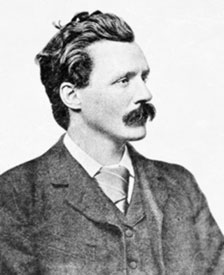
It’s nearing Christmas. The log fire is roaring away, sending brisk sparks up the chimney; snow is falling from the dove-grey sky; and I am sure there are mince pies somewhere if I could be bothered to get up and look. The perfect time and place, perhaps, for a longish Victorian novel. A festive Dickens, perhaps? That would be much too appropriate and cheering. I turned instead to my self-written dissertation reading list and decided to read a work of one of the most depressing Victorian novelists, the solemn-faced, little heard-of George Gissing. Granted, The Unclassed is not the most grim of his many grim novels – he even roams into the Dickensian humour, sometimes (which is more than can be said for The Nether World, a depressingly-titled story of the poorest of the poor in London), but nevertheless, it is a saddening, and sometimes frustrating, novel to read.

None of Gissing’s early novels made much money, or earned him much recognition, and all came from his experiences of the lower walks of life in contemporary London. In the 1870s, he fell in love with a prostitute, and married her, although their life together was disastrous. She drank and intermittently returned to prostitution, and he eventually paid her to live apart from him, where she died in utter squalor, from drink, and probably venereal disease. The Unclassed is positively cheery in comparison to this (although, when this was written, Gissing’s wife was very much alive) but it still it makes for sobering reading, even when sitting on a warm hearth-rug.

The tale opens in a little school. Three small girls are introduced to the reader, and one small act of anger perhaps starts the downwards spiral of tragedy. In innocent fury, Ida throws her slate at Harriet, who has made malicious (albeit true) comments about Ida’s mother being a streetwalker. Maud is a sweet, young, onlooker, who is on Ida’s side. As a result, Ida is dismissed from school; her mother soon dies, and she has little choice but to turn to prostitution herself. Harriet, a naturally weak child, is weakened still further by the blow, and emotionally blackmails her handsome, and kind cousin, Julian, into marrying her, where she proceeds to crush the joy of life out of him. Maud is browbeaten into religious submission by her stern aunt, and so lives most of her life in a state of nervous repression. Years later, when all three are roughly eighteen, comes a man, Osmond Waymark, friend of Julian, who falls into a state of confusion. He loves both Maud for her purity, and Ida for her vitality, and agonises over the differences of love and desire, of whether he can love two women at once, and due to the unconventional nature of his interaction with them, who he is bound to love best. He sees and believes he loves Maud first, and begs to be allowed to write to her when she goes away. He meets Ida on the streets shortly afterwards, and their friendship grows in Maud’s absence, although any tentative advances he makes are coolly rebuffed. Later on due to the machinations of the deranged Harriet, the now-loving Ida is absent, and the less reticent Maud present, and Waymark’s affections rapidly veer towards the latter. Absence makes the heart grown fonder? Not in Waymark’s case; he seems a strong advocate for the “out of sight, out of mind” school of thought.

Underlying the personal tribulations of the childhood friends, Ida and Maud (who, ironically, never meet each other in adulthood, or find out that the other is even in Waymark’s life, let alone the potential object of his affections) is the dingy, grimy backdrop of London. Although the main characters are a step up from the lowest classes – Waymark begins as a teacher, Maud a governess - the desperate poor are all too noticeable. There are several disturbing and grotesque images that are, quite frankly, unpleasant to read. The poor are depicted as animals, base and gross. Gissing has a way with words, however, so as not to show any perverse enjoyment in his depictions of wretchedness. He matter-of-factly describes a mother with smallpox, lying comatose on what was “for want of another name, was probably called a bed” while her infant children are sitting on the floor, playing with a dead kitten, “their only toy.” This pitiful image of life and death and deathliness all trapped in a room together is powerful and all-pervading; the kindly man who is inspecting them catches the disease himself, and later dies.

This is hardly a cheerful note on which to end a pre-Christmas post. However, rest assured that the ending is probably not quite as dire as you may be imagining. There is disease, (naturally; this is a Victorian novel), and there is death (obviously; this is a Gissing novel), but, unusually, at the end, there is a tremor of hope, even, dare I say, joy…? Which is a welcome relief. So, settle down by the fire, or radiator, perhaps (or, for those of you lucky enough to be abroad, smugly sit in the sunshine) and let the gentle, carefully-placed words of Gissing transport you to the slums of London. Who knows, you may even learn something about human compassion and love, which is, after all, sort of the message of Christmas… Happy reading!

Monday, 15 November 2010

Persuasion


I read the majority of Persuasion the day after a ball. Despite the lack of ballroom action in this particular novel in comparison to Austen’s other works, to read this Regency tale with last night’s merriment in mind seemed oddly fitting. Alright, there was a distinct lack of handsome Byronic heroes, and not a country reel to be heard, but there was plenty of wine and spirited conversation, (ranging from small-talk to salacious gossip), not to mention elegant dresses and a sharp dinner jacket or two. Slightly less Austen-esque were the unlimited candyfloss and shisha tent entertainments, but nevertheless, a ball is a ball, and, whether thrown now or two hundred years ago, excellent for awakening the imagination.

I always see Persuasion as Austen’s saddest novel. Some critics harp on about how it was her last novel and we can see her regret and woes showing through, but actually, it wasn’t at all – she’d begun writing another novel before she died, one that is quite lighthearted. However, that is not to undermine the poignant themes of regret and loss coursing through the story. It’s probably the old-fashioned sentimentalist lurking inside my soul, but I like to think that Austen looked at her own lifetime and missed opportunities, and wrote about the highly unlikely but overwhelming change that a second chance might bring about – perhaps sadly, perhaps wistfully, but always with the utmost grace and eloquence.

Persuasion is less about the thrill of a new love, as her other novels often are, but about the reminiscences and nostalgia surrounding the old. Most people will know the plot, but I will outline it anyway. Anne Elliot, at nineteen years old, meets a Frederick Wentworth. They are perfectly matched, entirely in love, and intend to marry. Indeed, they would have, had it not have been for the interference of Lady Russell, Anne’s godmother, a distinguished woman who is rather too pragmatic for her own good. Lady Russell sees his inferior rank and Anne’s young age as a poor recipe for happiness, and so persuades Anne to break off the engagement. He goes away to sea and makes his fortune; Anne is left behind. Eight years pass, and Anne has never fully recovered; her feelings remain the same, but she has become faded and sad. Circumstances arise (concerning her amusingly vain father and elder sister’s extravagant spending of money on trivialities) which lead to Wentworth’s (now a rich Captain, of course) sister and her husband renting Anne’s family house. Their paths cross, and Anne is in agony as she watches Wentworth, who is still angry with her, initiate flirtations with others. She, in turn receives attention from suitors, and the reader has to watch two soulmates, for want of a better word, drift even further apart. What makes it so heartrending for the reader is that we know that had they married eight years previously, they would have lived in perfect happiness. Even in the face of the inevitable Austen happy ending (I swore I would never spoil an ending for a reader, but, it being a Jane novel, it is fairly obvious that they end up together), it seems like a horrible waste. Eight years apart, which leads to little but his acquisition of money, without which they would have been perfectly happy, anyway.

A word or two must be said about her language. Less a playful social satire than her other works, her turn of phrase for conveying humour or that famous irony is nevertheless utterly exquisite. Yet what I truly adore is the way that the reader is let wholeheartedly into Anne’s mind through what is called ‘free indirect discourse’ – a style of narration that admits all the intimacy of a first-person narrative, without the egoistical ‘I’. We see Anne’s every blush, witness her deepest thoughts and sense her quickening heartbeat, as well as feel her sorrows, all the while maintaining a distance so we can judge characters for ourselves. Austen cleverly gives us as close a sense of Anne’s experience as possible, without straying into the first person. One moment that is extremely effective is when Anne sees Captain Wentworth for the first time in eight years. We see it through Anne’s eyes, briefly, as “her eye half met Captain Wentworth’s,” then as she hastily looks down, we hear his progress around the room as opposed to see it. In this ingenious way, Austen makes their meeting as awkwardly anticlimactic as it might be in real life, and pinpoints to perfection Anne’s confusion and distress.

Ah, I love Jane Austen. I love this novel; I won’t hear a word against it. Yes, I am one of those mad people who see Jane as a kind of friend and guiding influence. Her writing (not just her novels, her letters, too) make me wish I was as subtly and sharply witty as her, and not only do I identify with more than one of her heroines, but I also blame her for my extremely high standards in men… My love for Jane is blind and absolute, and therefore, do not expect a word of criticism from me. I am afraid you will have to read Persuasion yourself, then tell me of your misgivings, so I can argue against them, with as much wit and charm as I can muster.

Friday, 1 October 2010

The House of Mirth

Yet another trip abroad ensured that a wonderful book remained firmly in my suitcase, sadly only partly read. The occasion this time was a spontaneous weekend trip to Dublin to see a friend; an opportunity to appreciate the divine Georgian architecture, cram into the lively bars, and spend as little money as possible, as we are, of course, poor students. Resuming the novel, however, at the airport, before my flight home, had the power to utterly rejuvenate my rather exhausted spirits, and I remained enthralled by The House of Mirth and its vivacious, yet deliciously tragic heroine for the duration of the flight and the train home.

Edith Wharton is a name that resonates faintly in my knowledge as someone I have heard of, but never read. Both The House of Mirth and The Age of Innocence are on the reading list for my ‘American Fiction’ module - the only reason I reached for this one first was because of its cover – an enigmatic and captivating woman in an extravagant dress. In this instance, this is a case of judging a book by its cover, as it is, in short, what the novel is about. Lily Bart is the darling of New York society – graceful, unreservedly charming and very beautiful indeed. Intriguingly, Wharton ensures the reader sees very clearly the artifice behind her allure – yet this does nothing to dispel the reader’s liking for Lily. She is, after all, poor, compared to her circle of friends, and has to work every attraction she has to avoid being cast out. When the reader is introduced to her, she is in the process of tempting an uninteresting yet incredibly rich man to marry her. Lily is unashamedly drawn to money – to her, it is the most important thing in the world. She believes it keeps her happy and safe, although this belief is strongly tested throughout the novel, and eventually leads to her downfall. No matter how unfortunate her fate, Wharton draws the reader on as they wonder whether Lily will ever find the true key to happiness.

Despite the apparent seriousness of plot, The House of Mirth is a very readable book. At once a tantalising glimpse of the gilded age of American society, and a wry and intense satire on the triviality and shallowness of the people involved, its casual language is a joy to read. I suppose Wharton is almost Austenesque in her subtle social commentary – gently mocking the officious elderly aunts of the world, the desperate social climbers and the maidish spinsters. There is a different dimension, however, to pure ridicule; one gains the sense that it is the façade that Wharton despises so, not the people themselves. The characters’ motives become clear and the polished circle of New Yorkers seems instead to be in a Darwinian struggle for survival, one that drags people under while propelling others to the top.

Running throughout the novel, which is primarily a tale of Lily’s efforts to keep up appearances despite increasing debt, is a love story. Lawrence Selden is the one man who can see through Lily’s carefully constructed airs (though sometimes misguidedly), and love her nevertheless. The reader wills them together, and Wharton teases by drawing them close, and parting them time and time again. I shall leave it a mystery as to whether Lily can ever overcome the thrall of money and find her way to love, and I hope this inspires you to take up the novel and begin it yourself!

Overall, a topping novel. It makes me long to experience the thrill of New York before the turn of the century, and it makes me fear it as well. The two-faced heiresses and brusque men repulse me just as much as the whirlwind of parties and lighthearted conversation attracts. What makes this novel more than just a biting social commentary is the personal and poignant story of Lily – she charms the reader just as she charms many of the male characters themselves – though whether her story ends happily I shall leave to the reader to discover.

Tuesday, 21 September 2010

The End of the Affair

I read The End of the Affair in Hong Kong, so I’m afraid I wasn’t quite as focused as I should have been. Frequent pauses to gaze at the staggering view out of my friend’s balcony ensured progress was slow. Yet something about the humidity, and the serenity of the world outside - as ships breezed past the widening bay and the surrounding islands were shrouded in mist - threw this very English novel into sharp relief. The introspective and bitterly self-analytical nature of the narrator, and the passion of which he writes (one that could equally be of hatred or love) seemed to jump off the page into the sultry air, and smack me on the face.

Set in 1940, the intensity of the relationship between the narrator, Maurice Bendrix and Sarah effortless manages to eclipse the ferocious war in a way that hugely interests me. The Blitz was, of course, raging through London at the time, and whilst it plays in important role in the story, it is by no means the main character. It cemented my recent epiphany, realised after reading The Slaves of Solitude, that novels that spring from the ashes of war are not necessarily centred around the war itself. Indeed, at one point Bendrix notes carelessly, “I suppose Germany by this time had invaded the Low Countries…” showing perfectly the all-consuming nature of his affair with Sarah.

Despite Graham Greene being an extremely well-known and prolific author, I have read embarrassingly little of his work – not even Brighton Rock (although my mother did make me read Doctor Fischer of Geneva when I was fairly young – I think I am still traumatised). The End of the Affair is one of those novels that one is unsure as to whether one likes. There is a delicious twist to the story that is immensely satisfying, and yet the heavy debates on Catholicism, as well as the fact the narrator is not hugely likeable deadened my enjoyment somewhat. The knowledge that it is loosely autobiographical, however, piqued my interest. Boldly dedicated to ‘C’, this novel parallels Greene’s own affair with Lady Catherine Watson. As anyone with a remote interest in literature should know, it is a grave mistake to ever assume that the narrator is quite literally the voice of the author. However, it is interesting to note that the main character, Bendrix is a novelist, and comments clearly, and often coldly, on the process of writing. I wondered how similar Greene is to Bendrix, and whether he would really want to expose his soul on the cold pages of a novel, leaving me with the conclusion that Benedrix is like Greene, but is resolutely not Greene.

I found the characters rather fascinating, if not believable. The most likeable character has to be Henry, Sarah’s husband. He is kind and essentially a good man, yet he is dull and rather pathetic. He fulfills the clichéd position of the oblivious husband, and indeed, it seems to be his only role. I also found it difficult to wholly emphasise with Sarah. She is a fully-fledged character yet I found there was a curious two-dimensional quality to her in Bendrix’s narration. It could be that this is an artistic device in itself, she is, after all, full of vitality in her diary entries later on, as she agonises over her faith. Perhaps Greene deliberately ensures that Bendrix’s writings of her are inadequate and flat, reflecting the futility of the writing process, as one can never fully capture life in words. Or maybe he is commenting on the fact no one can every really know another person, something that is echoed in the plotline itself. Either way, it ensures the novel itself, while an excellent and engaging story, and quite amusing at times – seems very much to be written by a writer, if that makes any sense at all.

I am aware that this is not exactly a glowing (or coherent) review. Please do not misunderstand me: I genuinely admire this novel. The passion Bendrix feels for Sarah is tangible in every line, and the questions about life and God that are wrestled with by many of the characters are thought-provoking. However, it is also the kind of novel one needs frequent rests from; rests made all the more pressing by the presence of sunlight dancing on the waves outside the window.

Sunday, 5 September 2010

The Slaves of Solitude

My stepfather, having done the unenviable task of reading all my literary reviews in one go (everyone else in my immediate family having managed to keep up to date, although possibly out of politeness rather than desire), has pointed out that I talk rather a lot about how long it’s taken me to read a particular novel. I would like to say, in my defence, that the speed or slowness with which I peruse a work of literature is often a good indicator as to how much I enjoyed it – but nevertheless, I will cease this somewhat unliterary gauge of excellence and try and rely solely on the content.

Patrick Hamilton is one of those authors that contemporary authors and clever people bemoan as being forgotten or underappreciated. I don’t know if I’m being very uncultured in saying that I hadn’t heard of him until a few months back, but he’s not exactly a household name. But, as Doris Lessing furiously asserts in the introduction in my copy, he deserves to be. I have come to agree wholeheartedly. The Slaves of Solitude is a bleak but unabashedly humorous (in a wry sort of way) novel, written between 1943 and 1946, and set in the war years. Although there is no description of battlefield action, and no bombs are dropped in the duration of the novel, the war pervades every page and seems to taint the action and characters with lethargy and bitterness.

The novel takes place in the small fictional town of Thames Lockdon, in a boarding house, The Rosamund Tea Rooms. The main character is Miss Roach, a pleasant, ordinary sort of woman, approaching middle age. Also living at the Tea Rooms are a couple of elderly women, the abrasive and bullying Mr. Thwaites, and a more ‘common’ man, who spends very little time there. Everything seems bland and dull; one has the impression that there are identical boarding houses, with identical occupants all over the country, all with the same stagnant atmosphere. Hamilton manages to convey the oppressive atmosphere beautifully, representing perfectly, with an acute but never cruel eye, the pettiness and banality of the characters. Things are shaken up a bit with the arrival of an American lieutenant, and further still when Miss Roach’s German friend, Vicki, moves into the boarding house, and the main storyline is wrapped around these two events.

Hamilton’s use of language is both damning of the British social pattern, and hideously amusing. I found myself laughing aloud at Mr. Thawaites’ grotesque attempts to talk eloquently – it all seemed so surreal, almost Pinteresque, yet so horribly imaginable. Similarly, Miss Roach’s indignant internal monologues seem so very real that they are both alarming and funny. The main storyline (a feud between the very English Miss Roach and the dangerously continental and loathsomely seductive Vicki) is at once ridiculous if the much more serious background of the war is taken into account, but Hamilton gives it a sense of vast importance, and deals with the fraught emotions of Miss Roach gently and sensitively.

As ever, I am reluctant to give away important plot details, so I will restrain myself. It’s odd, actually, in that there isn’t that much plot to speak of – the true beauty of this novel is that Hamilton’s genius shines through his exquisitely careful use of language, designed to be read in seriousness, yet able to evoke strange feelings of pity, amusement and disdain. His characters are crafted with the utmost care, and one sympathises deeply with Miss Roach, and wonders where the gradual crescendo of quiet events in the deathlike boarding house will take her.

Overall, therefore, an immensely satisfying read. I hope this review portrays a little of Hamilton’s extreme skill at minutely portraying human character – and that you have noted that not once have I said how long this book has taken me to finish...

Friday, 3 September 2010

The Fallen Blade

This has to be the most contemp-orary book I will ever write about – not only is it written by an author who is still alive and well, it hasn’t even been published yet! The Fallen Blade: Act 1 of the Assassini Trilogy by Jon Courtenay Grimwood will be available to buy in January 2011, and I assure you, it is well worth the wait. I managed to get my grubby paws on it purely because of my bloodline – the esteemed author is, in fact, my uncle. All bias aside, I am being perfectly honest when I say that I enjoyed it enormously. I wouldn’t exactly call myself a literary snob, (I have, after all, read the Twilight Saga), but, let’s just say, if I hadn’t liked this particular book, I wouldn’t have immediately texted Jon and asked whether I was legally allowed to write a review before its publication (for those of you wondering: I am.) Perhaps it was the recent overdose of Victorian depression and Romantic wimpiness, but this absorbing and energetic novel was a total shock to the system. To say I was hooked is an underestimate. To say I am eager for the next novel is also an underestimate. Despite always liking a good night’s sleep, I read this late into the night and bolted awake early (most unlike me) to resume the story.

For those of you mildly disgusted by the Twilight books – full of sparkly vampires, and lovestruck werewolves – then, rest assured, this is absolutely nothing like them. Set in the dingy streets and elegant palaces of fifteenth century Venice, the city is conjured up from the pages like a mirage. Grimwood’s (how odd it is to use my own surname!) language is capable of evoking every scene with utter clarity. The filth and grime of the sewer-strewn canal paths are described as evocatively as the insincerely polite scenes at court. Acts of indescribable violence are recorded in the same manner as a sudden realisation of love. It is this level undercurrent of Grimwood’s narrative voice that binds the novel together, and that made me race through it at such an unprecedented speed.

The novel (which, I am afraid, is one of those that requires a family tree and a dramatis personae at the beginning – although if my brain could cope with this, so can yours) centres around Lady Giulietta, a young Venetian noblewoman, whose hand in marriage has been promised to a brutal foreign king, for the sake of a political allegiance. One has the impression that this kind of political power is genuinely all that matters to the members of Giulietta’s family that are orchestrating this connection, and indeed, much of the aristocracy at the time. The corruption of the court seems to trickle down the social ladder to every walk of Venetian life - there is very little trust and rather a lot of fear. The other main character (although there are several characters of importance) is Tycho – an unspeakably beautiful boy with silver-bright hair and strange eyes. He arrives in Venice with only the faintest memories and no understanding as to how he got there. His remarkable speed and reflexes attract the attention of the Duke’s chief assassin, who then attempts to recruit him to his secretive and elite group of hired murderers - the assassini. Tycho and Giulietta’s respective plotlines slide past each other, crossing and recrossing. And towering above these two protagonists is arguably the true main character: the city herself. Venice is a deceitful city with a beautiful face, behind which lies treachery and corruption. These elements combine into a deadly poison, and escalate towards the novel’s gripping conclusion.

Sorry for the complete lack of detail – I am most definitely not allowed to disclose important plot points. Still, I hope it creates some form of curiosity that will last until January. I can tell you now, that it will be an excellent book to read by the fire in the chills of winter! A quick summary: Grimwood (hah!) delivers an absolutely inspired take on assassins, werewolves and vampires - topics we’d all thought had been done to death (no pun intended). But, for me, it is the elusive Venice that draws one close, intoxicates, and withdraws – leaving the reader absolutely burning for more.